 English
  Español


- Redefining Payment Settlement
- A Diverse Ecosystem of Stablecoins and Networks
- Supporting Major Stablecoin Issuers
- Interoperability Across Blockchain Networks
- Early Adopters and Industry Support
- Expert Perspectives on the Future of Settlements
- Enhancing Liquidity and Operational Efficiency
- A Path Toward Global Adoption
- Conclusion
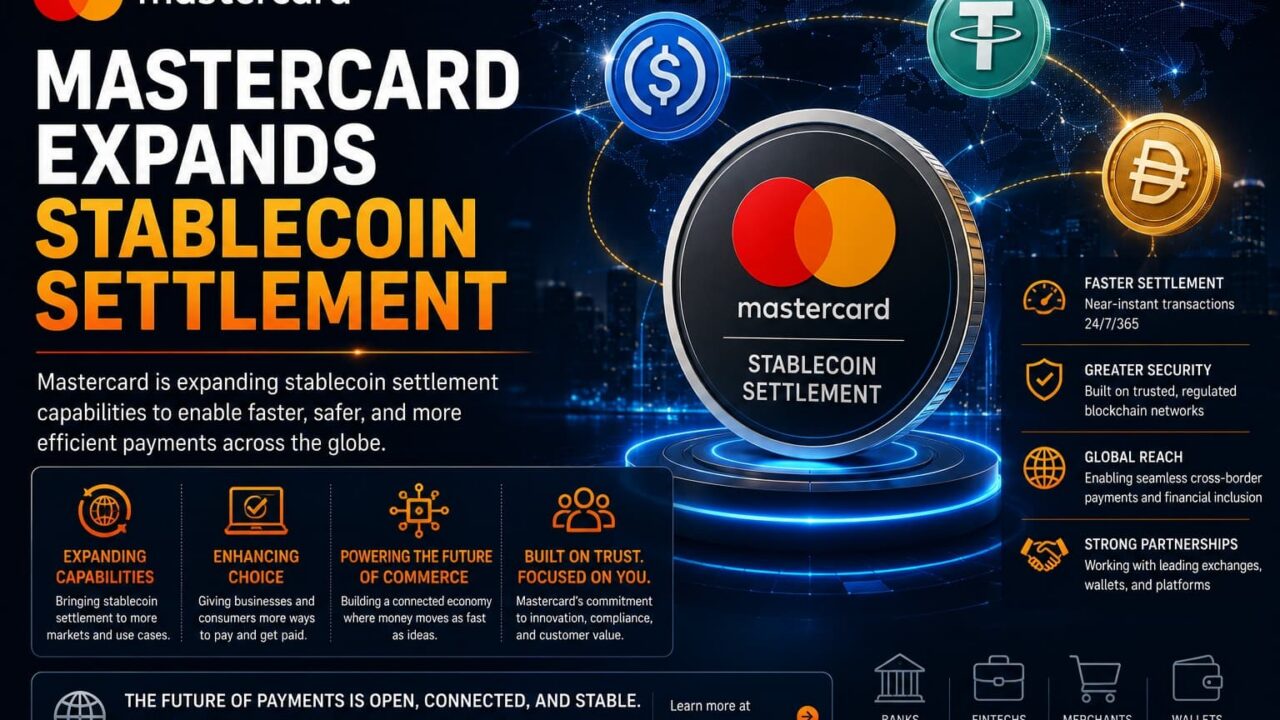
The global payments landscape is undergoing a profound transformation as institutional giants increasingly embrace blockchain technology. In a major move aimed at enhancing the efficiency and flexibility of cross-border and time-sensitive financial flows, Mastercard has announced significant plans to expand its settlement capabilities to include regulated stablecoins. This initiative represents a strategic shift in how the payment network facilitates transactions, offering partners unprecedented choice in how and when they settle their funds.
Redefining Payment Settlement
Mastercard’s latest strategy is designed to modernize the plumbing of the global financial system by integrating digital assets directly into its settlement infrastructure. By enabling settlement in both traditional fiat and regulated stablecoins, the company is directly addressing the needs of modern businesses that require faster, more liquid, and more transparent financial operations.
This expansion is not just about adopting a new technology; it is about providing greater liquidity management for time-sensitive, cross-border payments. For financial institutions and merchants, this means the ability to move value more rapidly, reducing the friction that has historically plagued international transfers.
Read Also
A Diverse Ecosystem of Stablecoins and Networks
Central to this expansion is Mastercard’s support for a broad range of regulated stablecoins and blockchain networks, ensuring the infrastructure is both versatile and resilient.
Supporting Major Stablecoin Issuers
Mastercard is collaborating with leading players in the stablecoin space to ensure a robust supply of assets for settlement. The supported stablecoins include:
ETH / USD Real-Time Chart
- Circle’s USDC
- Paxos-issued stablecoins, including USDG and USDP
- PayPal’s PYUSD
- Ripple’s RLUSD
- SoFi’s SoFiUSD
Interoperability Across Blockchain Networks
To maintain a high level of operational flexibility, the new settlement capabilities will function across a diverse array of blockchain networks. This multi-network approach includes support for:
- Arbitrum
- Coinbase’s Base
- Canton Network
- Ethereum
- Polygon
- Solana
- Tempo
- XRPL
By supporting such a wide range of networks, Mastercard is positioning itself at the center of a growing, interconnected digital economy, allowing partners to choose the infrastructure that best aligns with their specific operational needs.
Stay Ahead of the Curve
Join our weekly newsletter for exclusive insights.
Early Adopters and Industry Support
The rollout of these expanded capabilities is already gaining momentum with the support of several innovative financial institutions and service providers. The first entities to support this new settlement model include ARQ Finance, CBW Bank, Cross River Bank, Lead Bank, and Nuvei. The participation of these diverse firms signals a strong industry interest in adopting stablecoin-based settlement as a standard for future financial operations.
Expert Perspectives on the Future of Settlements
Industry analysts are viewing this development as a watershed moment for the integration of blockchain into mainstream finance. Experts suggest that as institutional firms like Mastercard provide the regulatory framework and infrastructure for stablecoin usage, the barriers to entry for global businesses will continue to fall.
“What Mastercard is doing is effectively bridging the gap between traditional finance and the decentralized web,” notes a leading fintech strategist. “By offering stablecoin settlement options, they are not only providing a tool for efficiency but are also validating the role of regulated digital assets in the global clearing ecosystem.”
Furthermore, legal and technical experts argue that the integration of settlement options that cover intraday, holiday, and weekend periods is a significant upgrade over existing banking hours, which have long been a bottleneck for global commerce.
Enhancing Liquidity and Operational Efficiency
The ability to settle transactions during holidays and weekends is a game-changer for international business. Traditional financial systems are often constrained by banking holidays and specific business hours, which can delay capital availability. By enabling settlement at any time, Mastercard is helping partners achieve better liquidity management and operational efficiency.
The integration of these new capabilities into the existing Mastercard framework allows partners to enjoy the benefits of blockchain technology while maintaining the security, compliance, and reliability they expect from a world-class payment network.
A Path Toward Global Adoption
The decision to expand these capabilities underscores a broader trend in the financial services sector: the move toward real-time, 24/7 financial infrastructure. As digital assets continue to mature, the infrastructure built by Mastercard will likely serve as a foundational element for the next generation of global payments.
As we look toward the future, the integration of regulated stablecoins into daily settlement processes could become the new norm, effectively shortening settlement times from days to seconds. This shift is expected to unlock trillions of dollars in liquidity that is currently tied up in legacy reconciliation processes.
Stay informed, read the latest crypto news in real time!
Conclusion
Mastercard’s latest move is a clear signal that the financial services industry is entering a new era of digital transformation. By providing partners with the flexibility to choose between fiat and regulated stablecoins, and by facilitating these transactions across multiple blockchain networks, Mastercard is setting a high bar for innovation in the payments space.
As early adopters like Cross River Bank and Nuvei begin to implement these changes, the broader market will likely follow, leading to a more efficient, interconnected, and liquid global economy.