English
  Español

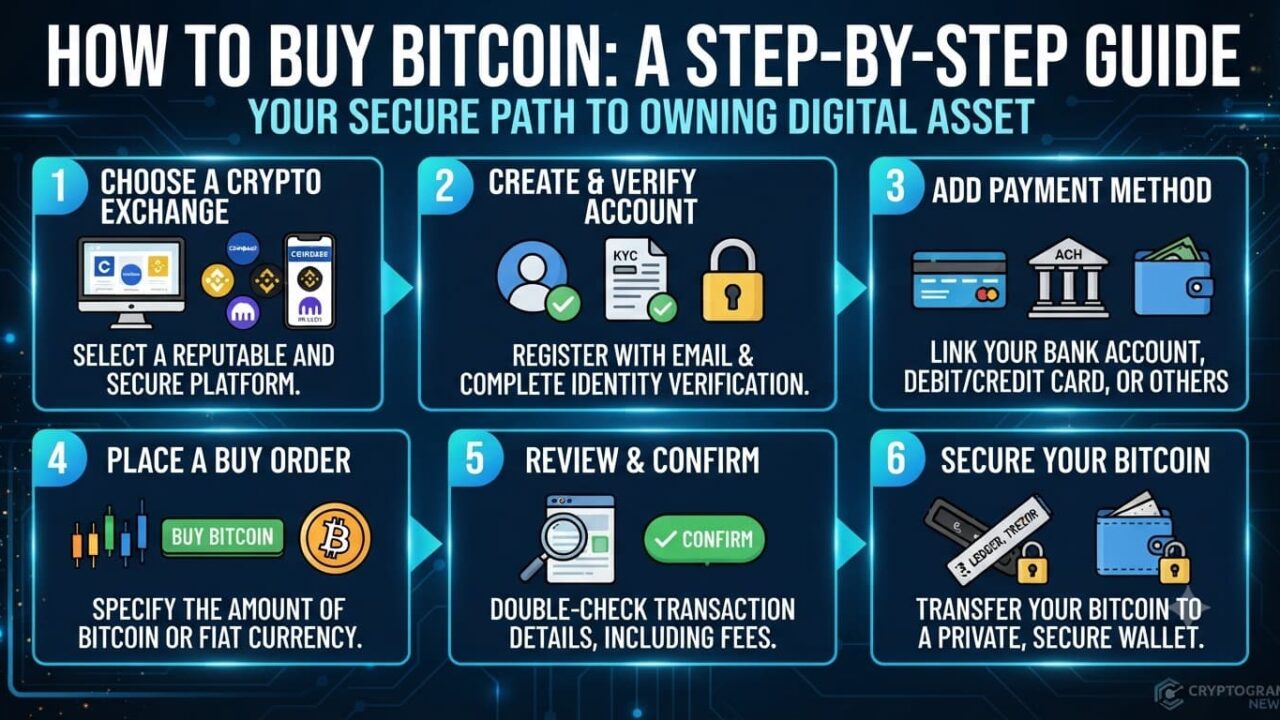

Buying your first Bitcoin can feel intimidating, but the process has become simple and secure once you understand the basics. This guide walks you through every step, from choosing a platform to safely storing your BTC.
Step 1: Choose a Reputable Exchange
Your first decision is where to buy. Look for an exchange with a strong security track record, transparent fees, proper licensing in your country, and good customer support. Compare your options in our Best Crypto Exchanges guide before committing to one.
BTC / USD Real-Time Chart
Step 2: Create and Verify Your Account
Most regulated exchanges require identity verification (KYC — Know Your Customer) before you can deposit funds or trade. This typically involves:
- Providing your name, email, and date of birth
- Uploading a government-issued ID
- Sometimes a selfie or video verification step
This process protects both you and the platform from fraud, and it’s required by financial regulations in most countries.
Read Also
Step 3: Secure Your Account
Before depositing any money, enable two-factor authentication (2FA) using an authenticator app rather than SMS, if the option is available. Use a strong, unique password, and never share your login credentials or verification codes with anyone.
Step 4: Deposit Funds
Fund your account using a bank transfer, debit card, or another supported payment method. Bank transfers usually have lower fees than card payments, though they may take longer to process.
ETH / USD Real-Time Chart
Step 5: Buy Bitcoin
Once your funds are available, you can typically buy Bitcoin in two ways:
- Simple/instant buy — enter an amount and purchase BTC immediately at the current market price (usually has a slightly higher fee)
- Trading interface — place a limit or market order on the exchange’s order book (usually cheaper, but requires more familiarity)
For beginners, starting with a small amount is a sensible way to learn the process before committing larger sums.
Stay Ahead of the Curve
Join our weekly newsletter for exclusive insights.
Step 6: Move Your Bitcoin to a Secure Wallet
Leaving large amounts of BTC on an exchange means trusting that platform with custody of your funds. For long-term holding, many users transfer their Bitcoin to a personal wallet where they control the private keys. Compare options in our Best Crypto Wallets guide — hardware wallets are generally considered the most secure option for larger holdings.
Common Mistakes to Avoid
- Skipping security setup — always enable 2FA before depositing funds
- Falling for scams — legitimate platforms will never ask for your private keys or seed phrase
- Sending to the wrong address — always double-check wallet addresses before confirming a transaction, since blockchain transfers cannot be reversed
- Investing more than you can afford to lose — Bitcoin is volatile; only invest what you’re prepared to hold through price swings
Frequently Asked Questions
What’s the minimum amount of Bitcoin I can buy? Most exchanges let you buy fractions of a Bitcoin — often as little as a few dollars’ worth.
Do I need a wallet to buy Bitcoin? Not immediately — most exchanges provide a built-in wallet. However, moving funds to a personal wallet gives you full control over your private keys.
Is buying Bitcoin taxable? In many countries, buying and selling Bitcoin can trigger tax obligations. Consult a tax professional in your jurisdiction for specific guidance.