English
  Español

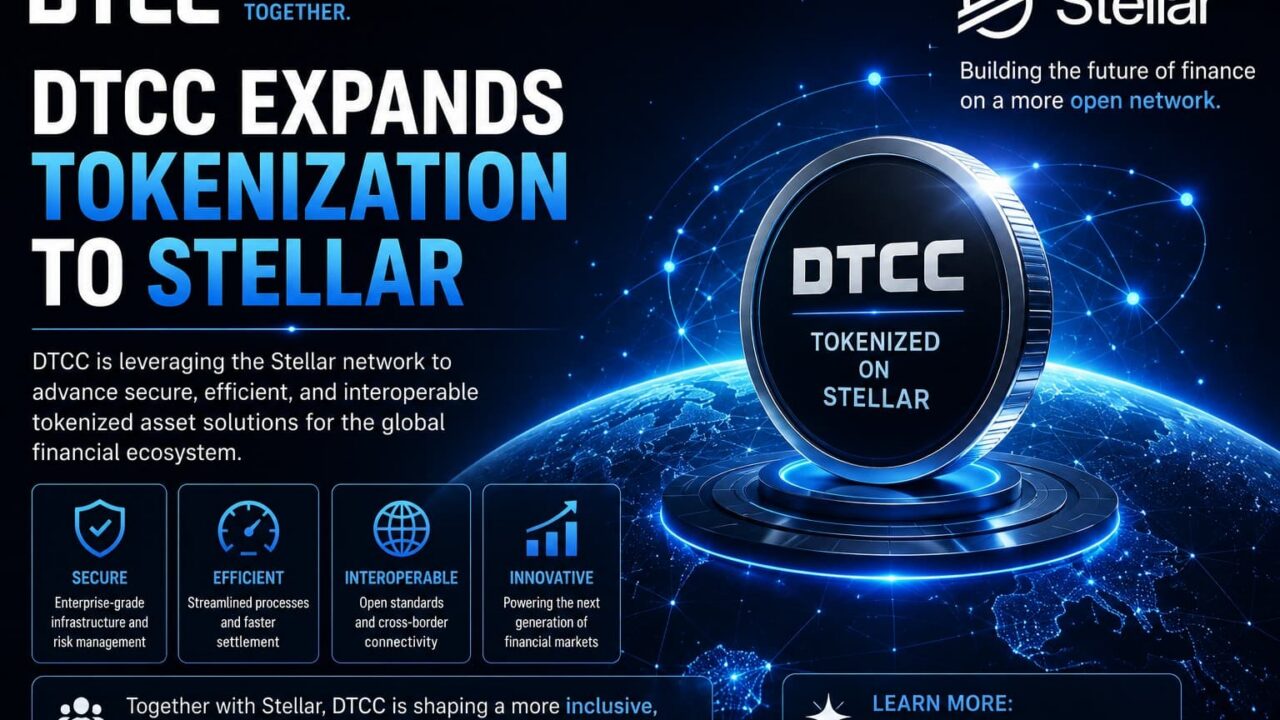

The Depository Trust & Clearing Corporation (DTCC), a cornerstone of the global financial market infrastructure, has announced a significant expansion of its digital asset strategy. By connecting its tokenization service to the Stellar public blockchain, the DTCC is taking a major step toward supporting the growing institutional demand for multi-chain interoperability. This move represents a strategic pivot in how traditional finance (TradFi) engages with public distributed ledger technology (DLT), aiming to streamline the settlement and issuance processes of financial assets.
The Strategic Shift Toward Multi-Chain Infrastructure
For years, the financial industry has debated the role of public versus private blockchains. The DTCC’s decision to integrate with Stellar signifies a move toward a more flexible, multi-chain approach. This strategy acknowledges that different financial products may eventually reside on various networks, requiring a robust infrastructure that can communicate across these disparate systems.
The DTCC’s digital asset service, which serves as a platform for tokenized assets, is now designed to support greater connectivity. By leveraging Stellar’s high-speed, low-cost network architecture, the organization intends to reduce friction in the post-trade lifecycle. This is not merely an experiment but a calculated effort to modernize the plumbing of the world’s financial markets.
Read Also
Why Stellar?
The choice of the Stellar blockchain is notable due to its specific design for asset issuance and fast, secure transactions. Stellar’s network is already widely recognized for its capabilities in cross-border payments and tokenized real-world assets (RWAs).
As noted in recent announcements, the DTCC views this integration as a way to enhance its existing capabilities in managing tokenized securities. By bridging its proprietary infrastructure with a public blockchain like Stellar, the DTCC is positioning itself to handle the next wave of institutional-grade tokenization with increased efficiency and transparency.
ETH / USD Real-Time Chart
Expert Opinions: Bridging the Divide
Industry experts have long pointed to the necessity of such bridges. “The integration of institutional clearing mechanisms with public DLT is the ‘holy grail’ of modern finance,” says a senior analyst specializing in digital assets. “It solves the trust issue inherent in public chains while keeping the speed and transparency that firms crave.”
Furthermore, the sentiment from the DTCC, as shared via their official channels, underscores a commitment to market stability. By expanding their multi-chain strategy, they are ensuring that they remain a neutral, reliable participant in the evolving digital asset landscape. Market observers suggest that this integration will likely serve as a blueprint for other clearing houses globally, proving that TradFi can successfully adopt public ledger technology without compromising regulatory standards.
Stay Ahead of the Curve
Join our weekly newsletter for exclusive insights.
H3: Enhancing Institutional Tokenization
The expansion of the tokenization service is multifaceted. By utilizing public networks, the DTCC can offer its clients:
- Increased accessibility to a broader range of financial assets.
- Improved operational efficiency through automated smart contract settlement.
- Greater transparency for regulators, who can monitor asset movements in real-time.
The move to integrate with Stellar is part of a broader “multi-chain” philosophy. The DTCC recognizes that the future of finance will not be limited to a single blockchain. Instead, it will be a fragmented yet interconnected ecosystem. By positioning its tokenization service at the center of this movement, the DTCC ensures it remains a vital facilitator of trade, regardless of the underlying network.
Technical Implications of the Integration
The technical requirements for such an integration are significant. Integrating a high-volume clearing system with a public blockchain requires rigorous security audits and a deep understanding of consensus mechanisms. The Stellar network, known for the Stellar Consensus Protocol (SCP), provides a robust environment that balances performance with the high security required for financial settlement.
This integration does not replace current clearing processes but enhances them. Assets can now be tokenized, tracked, and potentially settled with greater velocity. This reduces the “time-to-settlement” cycle—a primary goal for financial institutions looking to unlock capital that is currently tied up in slower, legacy settlement periods.
Future Outlook: The Road Ahead
What does this mean for the average investor? While the immediate benefits are felt by institutional clients and market participants, the long-term impact is the democratization of asset liquidity. When the tokenization service becomes the industry standard, moving assets between traditional accounts and blockchain-based wallets could become as simple as an email transfer.
The DTCC’s trajectory suggests that we are entering a phase where the boundaries between “crypto” and “finance” continue to blur. As the tokenization service matures, we can expect to see more partnerships between legacy clearing giants and public blockchain networks. This convergence is likely to drive further innovation in how we define, own, and transfer value in the global economy.
Conclusion
The decision to connect the tokenization service with the Stellar blockchain is a defining moment for the financial sector. It confirms that public blockchains have gained the trust of the highest levels of institutional finance. As the DTCC continues to refine its multi-chain strategy, the focus will undoubtedly remain on scalability, security, and the ongoing need to simplify complex post-trade workflows.
The tokenization service is no longer just a pilot project; it is the infrastructure of the future. By embracing public networks like Stellar, the DTCC is ensuring that it remains the heartbeat of global financial clearing, even as that heart begins to beat on the blockchain.