English
  Español

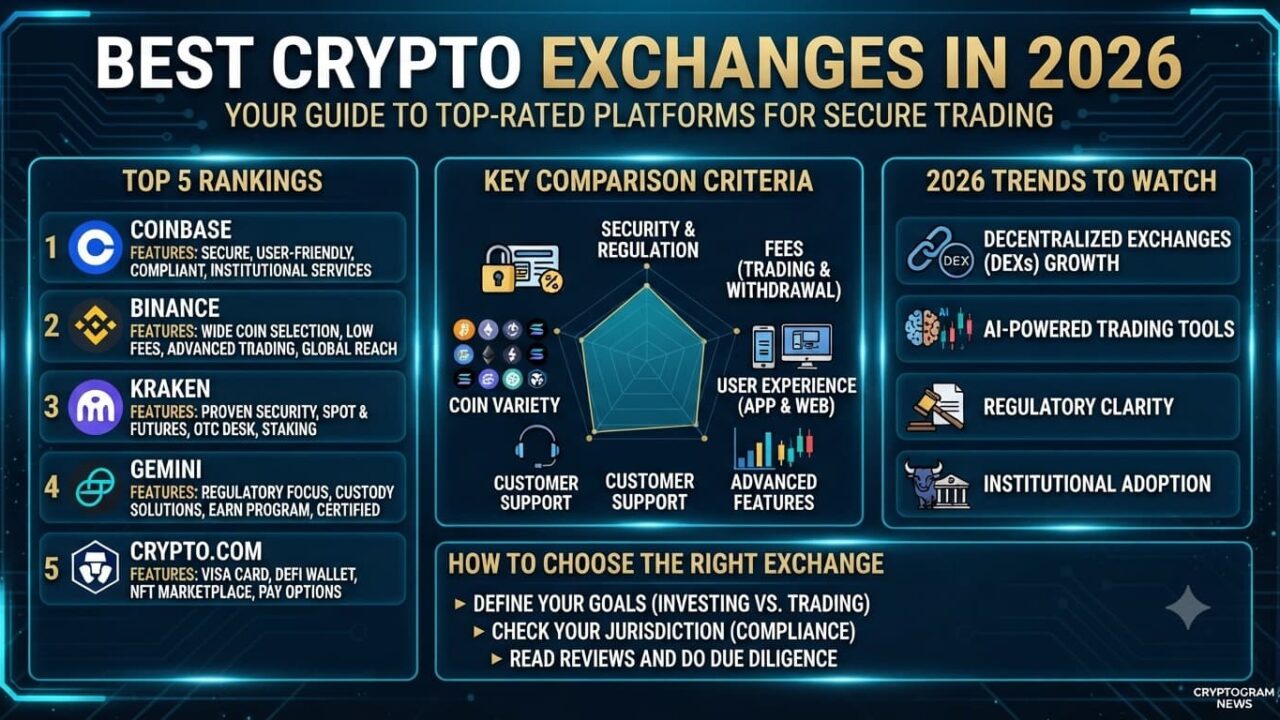

Choosing the right crypto exchange affects everything from the fees you pay to how safe your funds are. In 2026, the market has matured significantly, with proof-of-reserve audits, regulatory licensing, and security track records becoming just as important as coin selection and low fees. This guide compares the leading platforms by what matters most.
What to Look for in a Crypto Exchange
- Security — cold storage practices, proof-of-reserve audits, insurance coverage, and a clean security track record
- Regulation — proper licensing in your country, which adds accountability and legal protection
- Fees — spot, withdrawal, and maker/taker fee structures vary widely between platforms
- Coin selection — the number and variety of cryptocurrencies available to trade
- User experience — how easy it is to onboard, verify your identity, and start trading
Leading Exchanges by Strength
Coinbase is widely regarded as one of the most beginner-friendly, regulated exchanges, particularly in the United States, thanks to its clean interface, educational resources, and public-company transparency requirements.
BTC / USD Real-Time Chart
Kraken is known for a large selection of tradeable coins and a long operating history, appealing to users who want a broad asset range alongside strong regulatory standing.
Binance remains the largest exchange globally by trading volume and asset variety, though availability varies significantly by region and users should always confirm current local availability before signing up.
Read Also
OKX and Bybit are popular among more active traders for their derivatives products and Web3/DeFi integrations.
MEXC has built a reputation around low trading costs and fast listing of new tokens, appealing to cost-conscious, high-volume traders.
ETH / USD Real-Time Chart
No single exchange is universally “the best” — the right choice depends on your location, experience level, and whether you prioritize low fees, coin variety, regulatory protection, or advanced trading tools.
Centralized vs. Decentralized Exchanges
- Centralized exchanges (CEX) — companies like the ones above that hold custody of funds on your behalf, requiring identity verification (KYC) in most jurisdictions
- Decentralized exchanges (DEX) — platforms that let you trade directly from your own wallet without a central custodian, offering more privacy but requiring more personal responsibility for security
Exchange Safety Checklist
- Choose platforms licensed or regulated in your jurisdiction where possible
- Look for regular, published proof-of-reserve audits
- Enable two-factor authentication (2FA) immediately after signing up
- Never leave more funds on an exchange than you’re comfortable losing if the platform were compromised
- For long-term holdings, transfer funds to a personal wallet — see our Best Crypto Wallets guide
Getting Started
If you’re buying your first cryptocurrency, our How to Buy Bitcoin guide walks through the exchange sign-up process step by step. New to crypto entirely? Start with What Is Bitcoin? and What Is Blockchain?.
Stay Ahead of the Curve
Join our weekly newsletter for exclusive insights.
Frequently Asked Questions
Is it safe to keep crypto on an exchange? Exchanges are generally convenient for active trading, but for larger or long-term holdings, moving funds to a personal wallet reduces your exposure to exchange-specific risks like hacks or insolvency.
Do all exchanges require identity verification? Most regulated exchanges require KYC (Know Your Customer) verification before you can deposit or withdraw funds, in line with financial regulations.
Which exchange has the lowest fees? Fee structures change frequently and vary by trading volume and account tier — always check current, official fee schedules before choosing a platform based on cost alone.