English
  Español

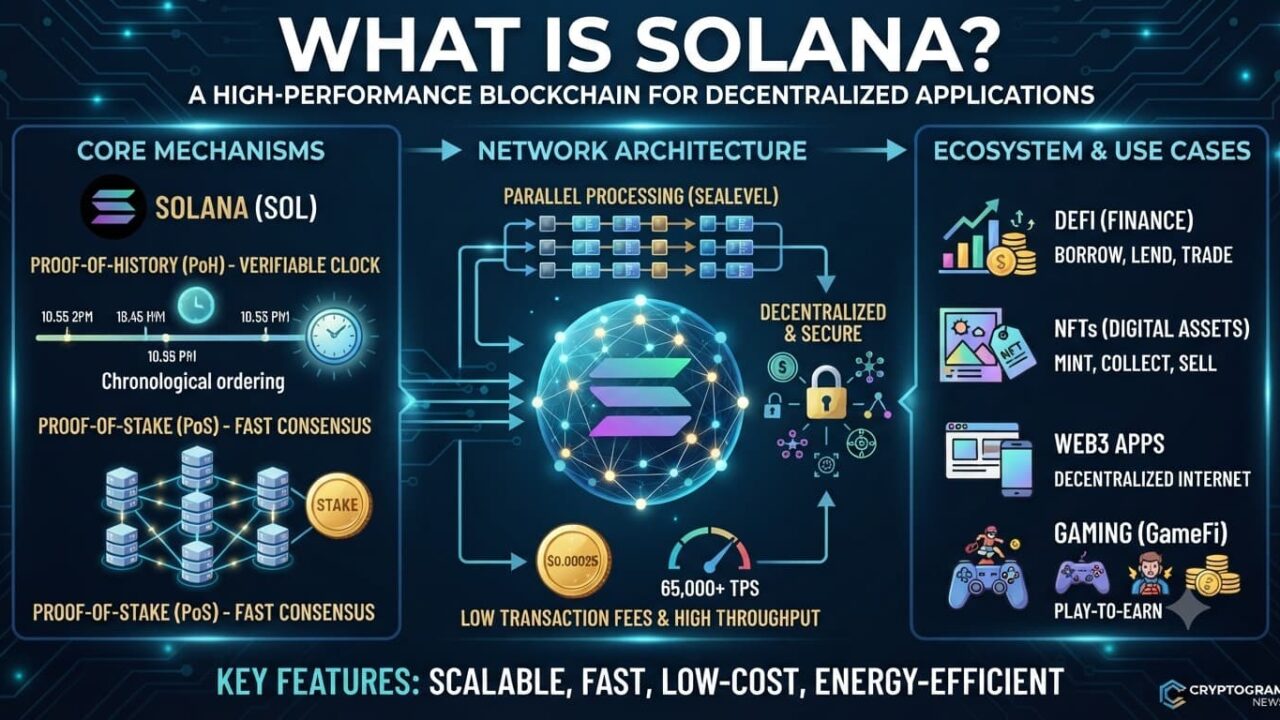

Solana is a high-performance blockchain designed for speed and low transaction costs. Launched in 2020 by Anatoly Yakovenko, Solana was built to solve one of blockchain’s biggest challenges: scalability — the ability to process thousands of transactions per second without sacrificing decentralization or security.
How Does Solana Work?
Solana‘s speed comes from a unique innovation called Proof of History (PoH), combined with a Proof of Stake (PoS) consensus mechanism. PoH creates a verifiable timestamp for every transaction before it’s even confirmed, allowing validators to process transactions in parallel rather than one at a time. This architecture lets Solana handle a far higher transaction throughput than many older blockchains, with fees that are typically a fraction of a cent.
BTC / USD Real-Time Chart
Key Features of Solana
- High throughput — capable of processing thousands of transactions per second
- Low fees — transactions typically cost a fraction of a cent
- Fast finality — transactions confirm in seconds
- Growing ecosystem — widely used for DeFi, NFTs, gaming, and payments apps
What Is Solana Used For?
- Transaction fees — SOL pays for gas on the network
- Staking — SOL holders can stake their tokens to help secure the network and earn rewards
- Governance — participating in ecosystem decisions on some Solana-based projects
- DeFi & NFTs — SOL is the base currency for trading and minting across Solana’s app ecosystem
Solana’s Trade-offs
Solana’s speed comes with engineering complexity. The network has experienced past outages during periods of extreme demand, though ongoing upgrades have focused on improving network resilience and reliability. As with any blockchain, it’s worth checking current network status before relying on it for time-sensitive transactions.
Solana vs. Ethereum: Quick Comparison
| Feature | Ethereum | Solana |
|---|---|---|
| Consensus | Proof of Stake | Proof of Stake + Proof of History |
| Speed | Slower (Layer 2s help) | Very fast, single layer |
| Fees | Variable, can be higher | Typically very low |
| Ecosystem maturity | Most established | Rapidly growing |
Getting Started With Solana
Ready to explore Solana? You’ll need a wallet that supports SOL and an exchange to purchase it. Check our guides on the Best Crypto Wallets and Best Crypto Exchanges. If you’re new to crypto, start with What Is Blockchain? and What Is Bitcoin?.
Read Also
Frequently Asked Questions
Is Solana decentralized? Solana uses a network of independent validators, though it has historically had a smaller validator set than Bitcoin or Ethereum — a trade-off often made for speed.
What can you build on Solana? Developers use Solana for DeFi protocols, NFT marketplaces, payment apps, and games that need fast, cheap transactions.
Is SOL a good long-term investment? Like all cryptocurrencies, SOL is volatile and carries risk. Always do your own research and never invest more than you can afford to lose.