English
  Español

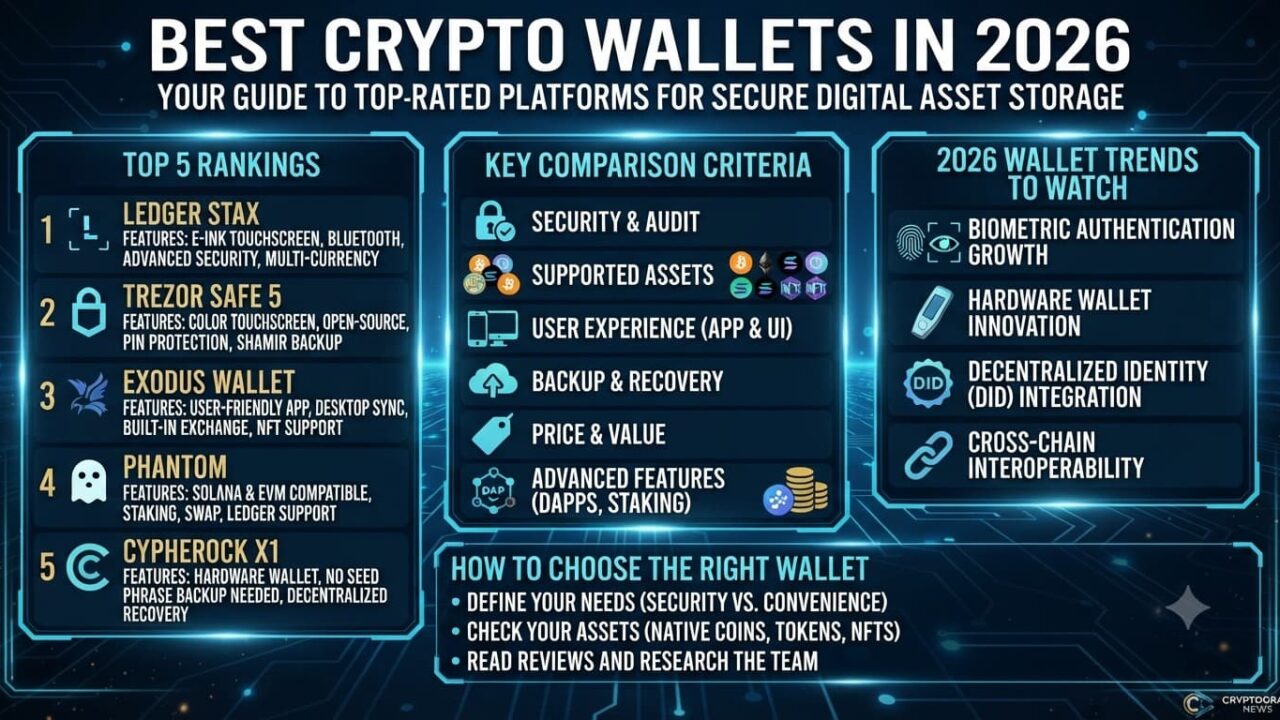

A crypto wallet doesn’t actually store your coins — it stores the private keys that give you access to your assets on the blockchain. Choosing the right wallet is one of the most important security decisions any crypto user makes. This guide compares the leading hot (software) and cold (hardware) wallets of 2026.
Hot Wallets vs. Cold Wallets
- Hot wallets are software apps (mobile, desktop, or browser extension) connected to the internet. They’re convenient for everyday transactions, DeFi, and NFTs, but are more exposed to online threats.
- Cold wallets are physical hardware devices that keep private keys offline. They trade some convenience for significantly stronger protection against remote hacking, making them the preferred choice for long-term, larger holdings.
Top Hot (Software) Wallets
MetaMask remains one of the most widely used software wallets, especially popular among users active in decentralized finance and Web3 applications thanks to broad dApp and Ethereum ecosystem support.
BTC / USD Real-Time Chart
Trust Wallet is a multichain, mobile-first, non-custodial wallet supporting a large number of blockchains natively, combining storage, swaps, and staking in a single app.
Phantom and Rabby have also grown in popularity among users prioritizing a clean interface and strong multi-chain or Solana-focused support.
Read Also
Top Cold (Hardware) Wallets
Ledger devices remain a leading choice for hardware security, pairing a certified secure chip with native multi-asset support. Transactions are verified on the device’s own secure screen before approval, so what you see can’t be manipulated by malware on your computer or phone.
Trezor is another long-standing hardware wallet brand, offering open-source firmware and a strong reputation in the security community.
ETH / USD Real-Time Chart
Both brands offer models at different price points, so compare current specs and pricing directly on their official sites before purchasing.
Wallet Options Without a Traditional Seed Phrase
Some newer wallets use MPC (multi-party computation) technology instead of a single seed phrase, splitting key security across your device and the provider’s system, with recovery handled through biometrics and encrypted backups. This can lower the barrier for beginners who find seed-phrase management intimidating, though it introduces a different trust model worth researching before use.
Stay Ahead of the Curve
Join our weekly newsletter for exclusive insights.
How to Choose the Right Wallet for You
| Use Case | Recommended Type |
|---|---|
| Long-term holding, large amounts | Hardware (cold) wallet |
| Daily DeFi/NFT use | Software (hot) wallet |
| Beginners wanting simplicity | Mobile wallet with clear onboarding |
| Multi-chain portfolio | Multichain-native wallet |
Wallet Security Checklist
- Write down your seed phrase on paper (or metal) and never store it digitally or share it with anyone
- Enable biometric or PIN protection on mobile wallets
- Verify you’re downloading official wallet apps from the provider’s real website or official app store listing
- For large holdings, consider a hardware wallet paired with a software wallet for daily use
- Double-check every wallet address before sending funds — blockchain transactions cannot be reversed
Getting Started
Before choosing a wallet, make sure you understand what you’re storing. Read What Is Bitcoin?, What Is Ethereum?, and How to Buy Bitcoin. You’ll also want a trusted platform to purchase crypto — see our Best Crypto Exchanges guide.
Frequently Asked Questions
Is a hardware wallet worth it for beginners? If you’re only holding a small amount to learn, a reputable software wallet is usually sufficient. As your holdings grow, a hardware wallet adds meaningful protection.
What happens if I lose my hardware wallet? As long as you have your recovery (seed) phrase safely stored, you can restore your funds on a new device.
Can a wallet be hacked? Software wallets face more online exposure than hardware wallets, which keep keys fully offline. No storage method is 100% risk-free, so good security habits matter regardless of wallet type.