English
  Español

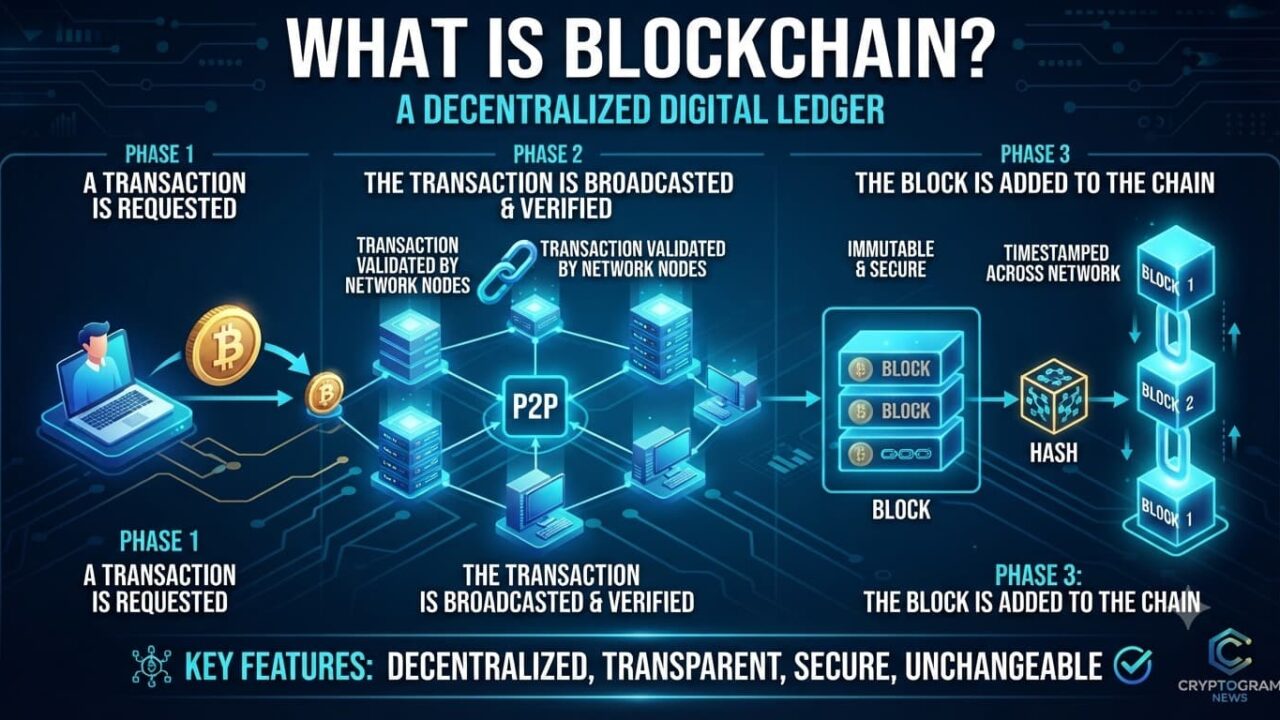

Blockchain is the underlying technology that powers Bitcoin, Ethereum, and virtually every other cryptocurrency. At its core, a blockchain is a distributed digital ledger — a record-keeping system shared across a network of computers, rather than stored by a single company or government.
How Does Blockchain Work?
A blockchain groups transactions into “blocks.” Each new block contains a cryptographic reference to the previous block, forming a chronological, tamper-evident chain. Once a block is added, changing it would require altering every subsequent block across the majority of the network — making the ledger extremely difficult to falsify.
BTC / USD Real-Time Chart
Instead of one central authority verifying transactions, blockchains rely on a consensus mechanism — a set of rules that independent participants (nodes) follow to agree on which transactions are valid. The two most common mechanisms are:
- Proof of Work (PoW) — used by Bitcoin, where miners compete to solve computational puzzles to add new blocks
- Proof of Stake (PoS) — used by Ethereum and many newer blockchains, where validators lock up cryptocurrency as collateral to earn the right to confirm transactions
Key Properties of Blockchain
- Decentralization — no single entity controls the ledger
- Transparency — most blockchains are public, so anyone can verify transactions
- Immutability — once confirmed, transactions are extremely difficult to alter or delete
- Security — cryptography protects the integrity of the data and user ownership
What Is Blockchain Used For?
Beyond powering cryptocurrencies, blockchain technology has expanded into many other areas:
Read Also
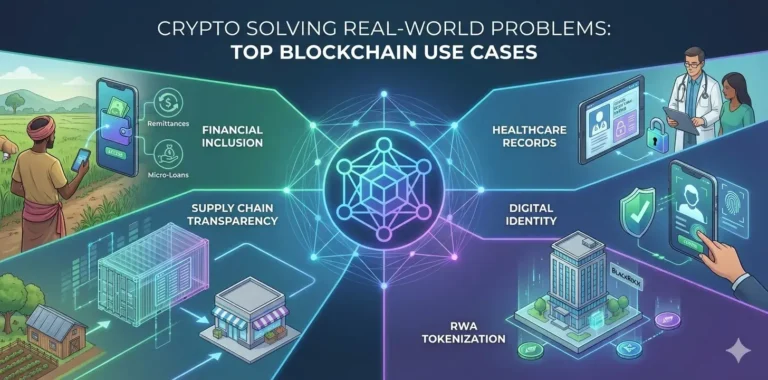
- Smart contracts — self-executing agreements coded directly onto platforms like Ethereum
- Supply chain tracking — verifying the origin and journey of goods
- Digital identity — giving individuals more control over their personal data
- Tokenization — representing real-world assets (like real estate or art) as digital tokens
- NFTs — unique digital assets representing ownership of art, collectibles, or media
Public vs. Private Blockchains
- Public blockchains (like Bitcoin and Ethereum) are open for anyone to join, view, and verify
- Private/permissioned blockchains restrict participation to approved organizations, often used internally by businesses for specific processes
Blockchain vs. Traditional Databases
| Feature | Traditional Database | Blockchain |
|---|---|---|
| Control | Central authority | Distributed network |
| Transparency | Often private | Often public |
| Data changes | Can be edited/deleted | Extremely difficult to alter |
| Trust model | Trust the institution | Trust the protocol/network |
Getting Started
Now that you understand the foundation, explore the assets built on top of it: What Is Bitcoin?, What Is Ethereum?, and What Is Solana?. Ready to get hands-on? Read How to Buy Bitcoin and compare the Best Crypto Wallets and Best Crypto Exchanges.
Frequently Asked Questions
Is blockchain the same as cryptocurrency? No. Blockchain is the underlying technology; cryptocurrency is one application built on top of it.
ETH / USD Real-Time Chart
Can blockchain data be deleted? In practice, no — once enough blocks have been added after a transaction, altering it would require overpowering the majority of the network, which is extremely difficult on large, established blockchains.
Do I need to understand blockchain to use cryptocurrency? Not in depth, but a basic understanding helps you make safer, more informed decisions when buying, storing, and trading crypto.