English
  Español

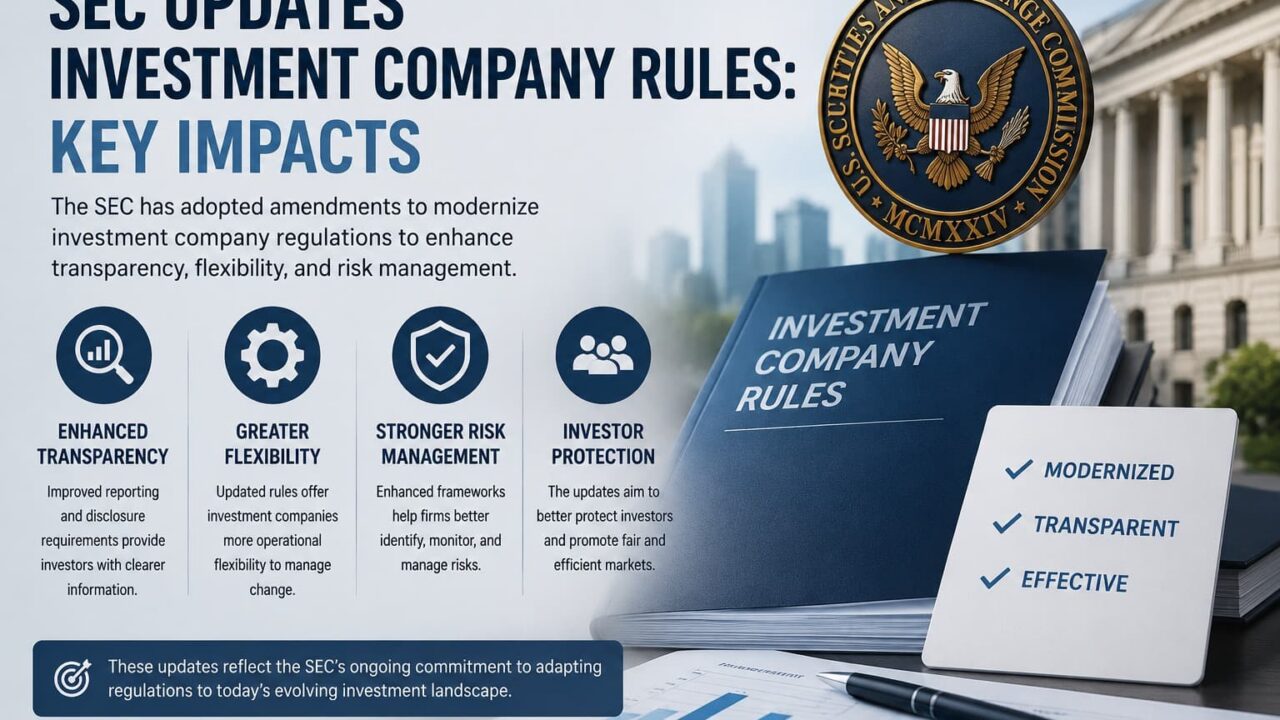

Understanding the New SEC Regulatory Framework
The regulatory environment for financial entities in the United States is undergoing a significant transformation. As of mid-2026, the Securities and Exchange Commission (SEC) has continued to refine its approach to market oversight, particularly regarding entities that function as investment vehicles. A primary focus of these ongoing developments is the application of the Investment Company Act to modern digital asset participants.
The latest regulatory update, documented under release IC-36165, represents a critical shift in how the commission views pooled investment structures. This move aims to enhance transparency, mitigate systemic risk, and ensure that investors are adequately protected against the volatility often associated with emerging digital asset classes.
BTC / USD Real-Time Chart
The Evolution of the Investment Company Act
Historically, the Investment Company Act of 1940 was designed to regulate entities that invest, reinvest, and trade in securities. Its core objective is to provide a framework for disclosure and fiduciary responsibility. However, the rise of decentralized finance and tokenized assets has challenged these traditional definitions.
Many market observers have argued that various digital asset platforms operate effectively as “shadow investment companies.” By issuing redeemable claims and investing customer funds in ways that mirror traditional mutual funds or ETFs, these entities trigger the historical criteria of the 1940 Act, even if they have previously avoided such classification.
Read Also
Bridging the Gap in Crypto Regulation
A major point of contention in the U.S. financial landscape has been the jurisdictional overlap between the SEC and the Commodity Futures Trading Commission (CFTC). While the SEC generally applies the Howey test to determine if a digital asset constitutes an “investment contract,” the CFTC has often characterized certain assets as commodities.
The implementation of rules such as those found in IC-36165 is intended to provide greater clarity. By formalizing the regulatory requirements for entities that function as investment companies, the SEC is working to move away from a strategy of “regulation-by-enforcement” and toward a more predictable, rule-based regime.
ETH / USD Real-Time Chart
Expert Opinions on Regulatory Compliance
Legal experts and financial analysts have weighed in on the implications of these updates. “The shift toward formalizing investment company status for digital asset pools is a double-edged sword,” notes a leading scholar in securities law. “While it imposes significant compliance costs, it also legitimizes those entities that can meet the rigorous standards of the 1940 Act, potentially attracting institutional capital that has been sitting on the sidelines.”
Others emphasize the necessity of these measures to prevent systemic failure. Because many crypto-native platforms combine issuance, trading, custody, and lending, they introduce complex risks that traditional market structures were designed to compartmentalize. By treating these platforms as investment companies, the SEC aims to apply standardized risk-management protocols.
Stay Ahead of the Curve
Join our weekly newsletter for exclusive insights.
Implications for Market Participants
For firms currently operating in the digital asset space, the message is clear: the era of operating outside of established financial oversight is rapidly concluding. The new guidelines under IC-36165 mandate enhanced reporting, stricter custody requirements, and a re-evaluation of how pooled assets are marketed to the public.
How Investors Are Protected
The primary goal of these SEC updates is investor protection. Under the new framework, investment companies must:
- Maintain accurate records of all customer assets.
- Provide regular, standardized disclosures regarding portfolio holdings and performance.
- Adhere to strict fiduciary duties that prioritize client interests over proprietary trading activities.
As the industry matures, stakeholders must prepare for a more rigorous oversight process. This includes implementing robust anti-money laundering (AML) programs and ensuring that any pooled investment structure is fully transparent about its underlying asset exposure.
Future Outlook: Navigating the New Normal
Looking ahead, the interaction between federal legislation—such as the GENIUS Act—and SEC rulemaking will likely dictate the next phase of digital asset growth. While some entities may struggle to adapt to the regulatory burden, those that embrace the compliance framework will likely find a more stable and credible path to expansion.
Investors and market participants should remain vigilant as further guidance is issued. The goal of balancing innovation with stability is at the heart of the current U.S. approach to financial technology, and the latest SEC rules are a testament to that ongoing evolution.