 English
  Español

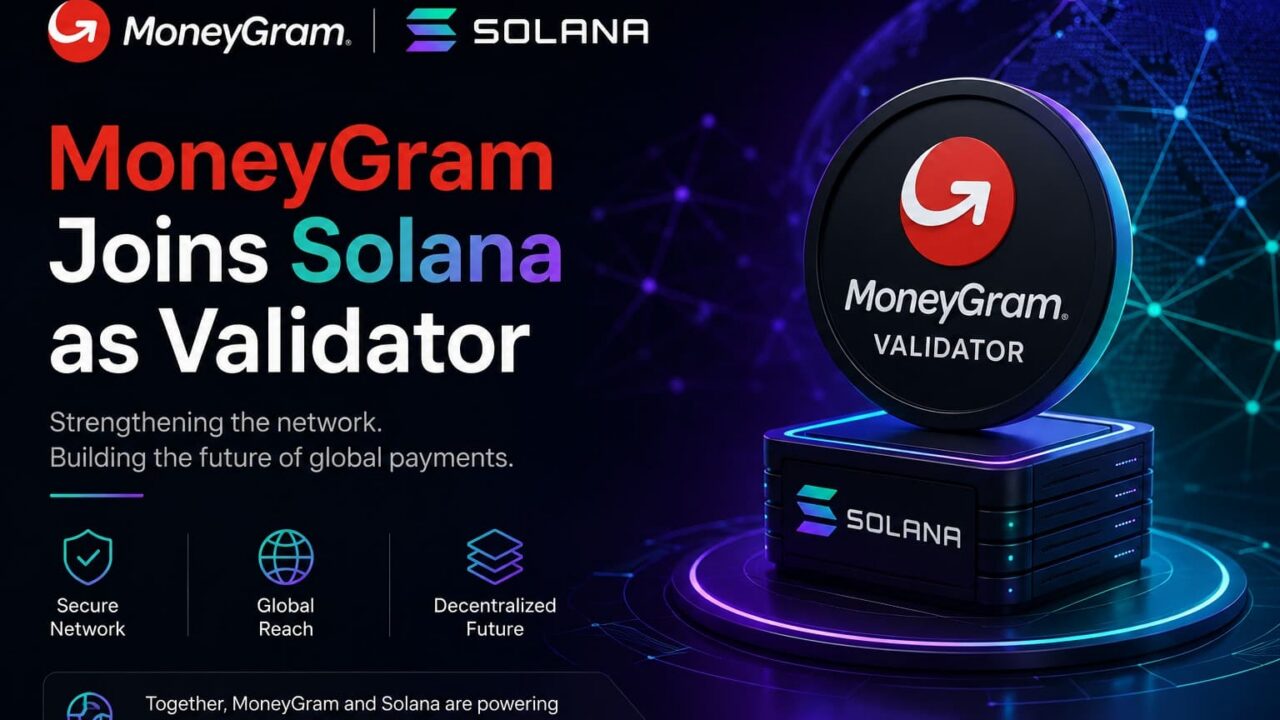

In a significant development for both institutional finance and blockchain scalability, global payments leader MoneyGram has officially joined the Solana ecosystem. By becoming an active validator on the network and joining the Solana Developer Platform (SDP) as an infrastructure partner, MoneyGram is deepening its long-term commitment to integrating blockchain technology into its core financial services.
This move marks a major shift in how traditional financial institutions engage with decentralized networks. Rather than simply utilizing blockchain applications, MoneyGram is now participating at the protocol level, staking SOL tokens and processing transaction blocks to help secure one of the world’s highest-performing blockchains.
From Blockchain User to Protocol Participant
MoneyGram’s history with blockchain technology spans over five years. Previously known for its integration with RippleNet and its ongoing work with the Stellar network, MoneyGram has consistently sought ways to leverage distributed ledger technology to improve cross-border payments.
Read Also
By joining the Solana network, the firm is expanding its multi-chain strategy. Luke Tuttle, Chief Product and Technology Officer at MoneyGram, emphasized the strategic importance of this validator role: “Running a validator puts MoneyGram inside Solana’s consensus. We stake SOL, process transaction blocks and help secure the network at the protocol level. We help run the rails we move money on”.
This transition from being a consumer of blockchain services to an infrastructure operator signals a new level of maturity in institutional crypto adoption.
ETH / USD Real-Time Chart
Strengthening the Solana Developer Platform
In addition to running a validator, MoneyGram has joined the Solana Developer Platform (SDP). Launched in early 2026, the SDP is an AI-ready, API-driven platform designed to help enterprises design, build, and scale compliant financial products on Solana.
MoneyGram joins an elite cohort of institutional partners already utilizing the platform, including:
Stay Ahead of the Curve
Join our weekly newsletter for exclusive insights.
- Mastercard
- Worldpay
- Western Union
By joining this roster, MoneyGram gains access to development tools that facilitate stablecoin issuance, payments orchestration, and on-chain trading. For an organization that serves over 60 million active customers through nearly half a million retail locations, these tools are essential for bridging the gap between traditional retail finance and modern digital asset rails.
Why Institutional Players Choose Solana
The arrival of a global remittance giant on Solana is not coincidental. Financial institutions are increasingly drawn to the network’s high-throughput architecture and cost-efficiency. Solana’s ability to handle substantial transaction volumes—with block times of approximately 400 milliseconds and median transaction fees often near $0.0005—makes it a compelling choice for firms requiring operational scale.
“Players like MoneyGram, with global scale and experience serving customers across markets, are engaging with Solana as more payments activity moves onchain,” noted Sheraz Shere, General Manager of Payments and Commerce at the Solana Foundation.
Industry analysts suggest that the composition of a network’s validator set serves as a critical market signal regarding its legitimacy. Having a firm with over 85 years of regulated payments experience actively contributing to network consensus strengthens the long-term institutional case for the ecosystem.
A Multi-Chain Future for Global Remittance
MoneyGram’s decision to operate as a validator on Solana does not mean it is moving away from other networks. The company is currently maintaining its presence on the Stellar blockchain, where it recently launched its MGUSD stablecoin.
Instead, the firm is positioning itself as a liquidity bridge between different blockchain ecosystems. By operating across multiple chains, MoneyGram ensures it can leverage the unique strengths of each:
- Stellar: Continues to anchor retail cash networks and native stablecoin issuance.
- Solana: Offers access to deeper stablecoin liquidity and significantly higher settlement throughput.
This multi-chain posture reflects a broader trend where major payment firms are integrating crypto rails as a permanent component of their infrastructure, rather than treating them as temporary experiments.
Expert Opinion: The Shift Toward Institutional Reliability
Industry experts view MoneyGram’s integration as a testament to the maturation of public blockchain networks. As traditional financial firms integrate blockchain into their core processes, they prioritize compliance, regulatory clarity, and operational scale—attributes MoneyGram brings to the table.
“This move matters because validators do more than simply use a blockchain application. They help process transactions, support network operations and signal a deeper commitment to the underlying infrastructure,” according to recent industry analysis. By participating directly in the validator set, MoneyGram is helping to define network legitimacy and raising the standard for what institutional contribution looks like in the digital asset space.
Conclusion
MoneyGram’s entry into the Solana validator set is a landmark event for the network and the broader payments industry. By leveraging Solana’s high-performance infrastructure to power its global remittance services, MoneyGram is setting a precedent for how legacy financial institutions can successfully transition to decentralized, multi-chain operations. As more payment activity migrates on-chain, the collaboration between established firms and high-speed blockchain protocols will likely continue to drive the next wave of global financial innovation.