English
  Español

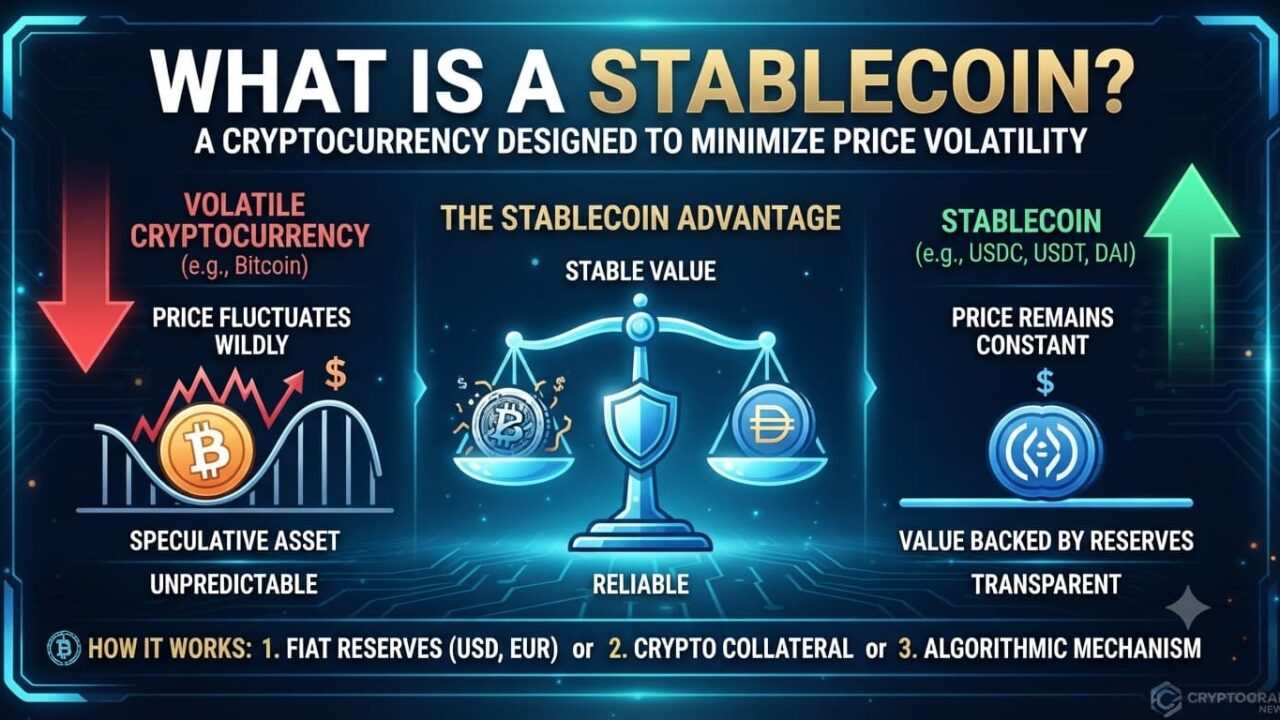

A stablecoin is a type of cryptocurrency designed to maintain a stable value, usually by pegging it to a real-world asset such as the US dollar. While Bitcoin and Ethereum can swing significantly in price, stablecoins aim to stay close to a fixed value — typically $1 — making them a practical bridge between traditional money and the crypto world.
Why Do Stablecoins Exist?
Cryptocurrency’s volatility makes it difficult to use for everyday purchases, savings, or as a reliable unit of account. Stablecoins solve this by combining the benefits of blockchain technology — speed, transparency, global accessibility — with the price stability of traditional currency.
BTC / USD Real-Time Chart
Types of Stablecoins
1. Fiat-Collateralized Stablecoins
Backed 1:1 by reserves of fiat currency (cash, cash equivalents, or short-term bonds) held by the issuing company. Examples include USDT (Tether) and USDC (Circle) — the two largest stablecoins by market capitalization.
2. Crypto-Collateralized Stablecoins
Backed by other cryptocurrencies, typically over-collateralized to absorb price swings in the collateral asset. These are usually managed through decentralized smart contracts rather than a central company.
Read Also
3. Algorithmic Stablecoins
Maintain their peg through supply-and-demand algorithms rather than direct reserves. This category carries the highest risk, as several algorithmic stablecoins have historically lost their peg and collapsed.
What Are Stablecoins Used For?
- Trading — moving in and out of volatile assets without converting back to traditional currency
- Payments and remittances — sending value across borders quickly and cheaply
- DeFi — used as collateral, for lending, and for earning yield
- Savings — a way to hold dollar-equivalent value on-chain, especially useful in regions with unstable local currencies
Risks to Understand
- Reserve transparency — not all issuers publish detailed, regularly audited proof of their reserves
- De-pegging risk — stablecoins can temporarily (or permanently) lose their peg during market stress
- Regulatory changes — stablecoin regulation continues to evolve globally, which can affect availability and issuer requirements
- Counterparty risk — fiat-backed stablecoins depend on the issuing company managing reserves responsibly
Stablecoins vs. Bitcoin: Quick Comparison
| Feature | Bitcoin | Stablecoin |
|---|---|---|
| Price | Volatile | Designed to stay stable |
| Purpose | Store of value/investment | Medium of exchange/stability |
| Backing | None (scarcity-based) | Fiat, crypto, or algorithmic |
Getting Started
To buy or hold stablecoins, you’ll need an exchange and a secure wallet — see our Best Crypto Exchanges and Best Crypto Wallets guides. Want to understand the underlying technology? Read What Is Blockchain? and What Is Ethereum?, since most stablecoins run on Ethereum and similar networks.
ETH / USD Real-Time Chart
Frequently Asked Questions
Are stablecoins 100% safe? No investment is entirely risk-free. Even fiat-backed stablecoins carry reserve and counterparty risk, and algorithmic stablecoins carry significantly higher risk.
Can stablecoins lose their peg? Yes. Several stablecoins have de-pegged temporarily during periods of extreme market stress, and some algorithmic designs have collapsed entirely.
Which stablecoin is the most widely used? USDT (Tether) and USDC (Circle) are currently the two largest stablecoins by market capitalization and trading volume.