Beyond Speculation: Crypto Projects Solving Real-World Problems
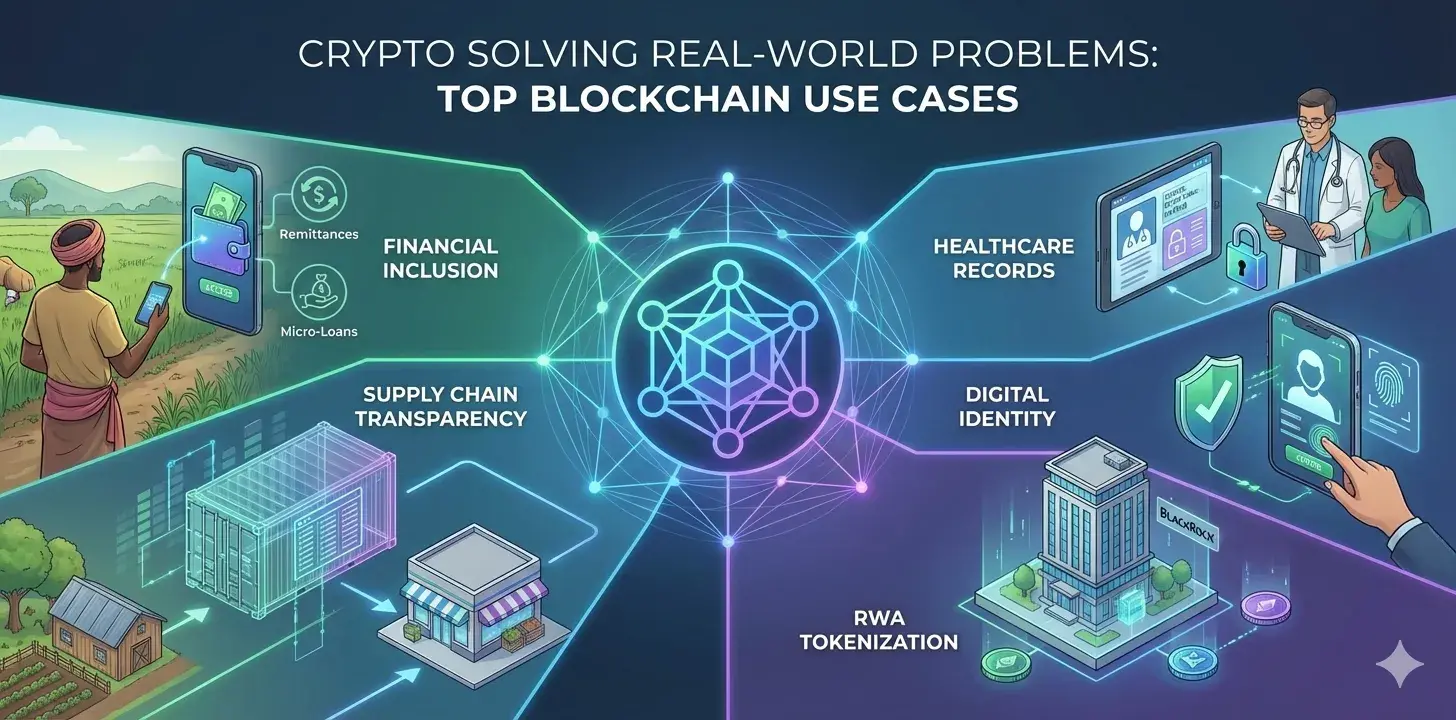
For years, the conversation surrounding cryptocurrency was dominated by price volatility, “to the moon” memes, and speculative trading. However, as we move through 2026, the narrative has shifted fundamentally. The industry has entered its “Utility Era,” where the success of a project is measured not just by its market cap, but by its ability to solve tangible, real-world problems.
From fixing broken global supply chains to providing financial identity to the unbanked, the underlying technology is proving to be a versatile tool for social and economic reform. In this deep dive, we explore the most impactful blockchain use cases that are currently transforming industries.
1. Financial Inclusion: Banking the Unbanked
One of the most profound challenges in global economics is the lack of access to basic financial services. According to the World Bank, over 1.4 billion adults remain unbanked. Traditional banking infrastructure is often too expensive or geographically inaccessible for people in developing nations.
Decentralized Finance (DeFi) as a Global Equalizer
Projects like Aave and MakerDAO have pioneered systems where anyone with an internet connection can access lending and borrowing services. By removing the “gatekeeper” (the bank), these platforms allow users to use their digital assets as collateral to secure loans instantly. This is one of the premier blockchain use cases because it operates 24/7 without requiring a credit score or a physical branch.
Remittances and Cross-Border Payments
Traditional international wire transfers are notoriously slow and expensive, with fees often eating up 5% to 10% of the total amount. Projects like Ripple (XRP) and Stellar (XLM) have built networks specifically designed to handle cross-border settlements in seconds for a fraction of a cent. For migrant workers sending money home to their families, this technology provides immediate relief and greater financial security.
2. Supply Chain Transparency and Provenance
In a globalized economy, tracking the journey of a product from the raw material stage to the retail shelf is incredibly complex. Fraud, contamination, and unethical labor practices often hide in the shadows of opaque paper-based ledgers.
Ensuring Food Safety
VeChain and IBM Food Trust have demonstrated how distributed ledgers can track food products. If a batch of lettuce is found to be contaminated with E. coli, blockchain allows retailers to trace the source back to the specific farm in seconds rather than weeks. When we examine successful blockchain use cases, the ability to save lives through rapid food traceability stands out as a top priority.
Eliminating Counterfeit Goods
The luxury goods market loses billions annually to high-quality “superfakes.” Brands like LVMH and Prada are now utilizing blockchain-based digital passports. A consumer can scan a handbag’s NFC chip and see a permanent, unalterable record of its authenticity and ownership history on the blockchain.
3. Real-World Asset (RWA) Tokenization
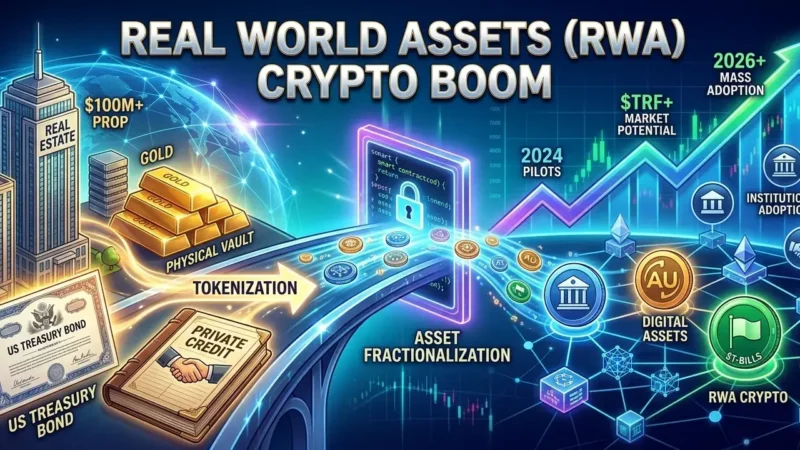
Perhaps the biggest trend of 2026 is the migration of traditional assets—like real estate, gold, and government bonds—onto the blockchain. This process, known as tokenization, breaks large assets into smaller, digital “fractions.”
Democratizing Real Estate
Investing in commercial real estate used to be reserved for the ultra-wealthy or institutional funds. Today, through platforms like Centrifuge and RealT, a retail investor can buy $50 worth of a high-rise apartment building. The logistics sector and property markets provide some of the most compelling blockchain use cases today, as they provide liquidity to traditionally “stiff” markets.
Institutional Adoption: The BlackRock Effect
The entry of major players like BlackRock into the RWA space has validated the technology. By placing US Treasury bills on-chain, institutions can settle trades instantly, eliminating the 48-hour “T+2” settlement cycle that has plagued traditional finance for decades.
4. Healthcare: Secure and Portable Medical Records
Medical data is currently siloed across different hospitals, clinics, and insurance providers. This fragmentation often leads to delayed treatments or dangerous medical errors because a doctor doesn’t have a patient’s full history.
Patient-Centric Data
Healthcare providers are exploring blockchain use cases to prevent record tampering while ensuring privacy. By using blockchain, a patient can own their own medical data. They can grant temporary access to a specialist via a private key, ensuring that their history is portable, secure, and always up to date, regardless of which hospital they visit.
5. Digital Identity and Self-Sovereign Identity (SSI)
In an age of rampant identity theft and data breaches, the way we prove who we are online is fundamentally broken. We currently rely on centralized “silos” like Google or Facebook to verify our identity, which creates massive privacy risks.
Decentralized Identifiers (DIDs)
Identity verification represents one of the most vital blockchain use cases for the digital age. Projects like Civic and KILT Protocol allow users to create a “Self-Sovereign Identity.” You can prove you are over 21 or that you have a valid driver’s license without ever revealing your home address or social security number. The blockchain simply verifies the “claim” without storing the sensitive data itself.
6. Sustainability and Carbon Credits
The carbon credit market has long been criticized for “double counting” and a lack of transparency. It is often difficult to verify if a carbon offset project (like planting trees) actually took place.
On-Chain Carbon Markets
KlimaDAO and other Regenerative Finance (ReFi) projects are moving carbon credits onto the blockchain. This makes every credit traceable, ensuring that once a credit is “retired” (used to offset emissions), it cannot be sold again. As the technology matures, these blockchain use cases will become invisible back-end systems for corporate ESG reporting.
7. The Future of Governance: DAOs
Decentralized Autonomous Organizations (DAOs) are changing how groups of people collaborate and manage funds. Instead of a CEO making decisions, a DAO uses “smart contracts” to execute votes cast by token holders.
Community-Led Innovation
Whether it is a venture fund, a charity, or a social club, DAOs provide a transparent way to manage collective resources. While Bitcoin was the first application, modern blockchain use cases extend far beyond digital gold, reaching into the very heart of how we organize human effort.
Stay informed, read the latest crypto news in real time!
Conclusion: The Shift from Hype to Reality
The diversity of blockchain use cases proves the industry has moved past its infancy. We are no longer asking if blockchain is useful, but rather how fast it can be integrated into our daily lives.
By solving “boring” but essential problems—like settlement times, supply chain gaps, and identity theft—crypto projects are building a more efficient and equitable global infrastructure. As we look toward the end of the decade, the “crypto” part of these projects will likely fade into the background, leaving behind a world that is more transparent, accessible, and secure.